Introduction: Weaving the Threads of Discovery and Destiny

The endless curiosity of human beings has always explored the mysteries of the universe and the riddles of earthly existence simultaneously. Recording the movements of the heavens, building kingdoms on earth, making scientific breakthroughs, and forming profound cultural beliefs is a human journey woven with the threads of discovery, ambition, and destiny. This report explores these seemingly disparate stories interdisciplinaryly, linking modern astronomy, the history of ancient Korean dynasties, and dramatic chapters in Russian history.
We will examine how the quest for “Planet Nine” reflects historical predictions of the unknown, how the reclassification of planets like Pluto reflects evolving scientific understanding and popular sentiment, and how even the names we use are rooted in centuries of philosophical and political struggle. We will delve deep into the dual legacy of an American astronomer whose fascination with Mars was intertwined with observations of Joseon, and we will journey to Lake Baikal, a vast and enigmatic place that is home to unique natural phenomena, legends of Russian revolutionaries, and lost treasures. By examining these diverse stories, we will uncover surprising similarities and profound differences in how humanity has struggled to understand its place in the universe and shape its destiny on earth, and we will illuminate the interconnectedness of human endeavor across scientific and historical domains.
The Unknown Ninth Planet: The Quest for Modern Astronomy
Exploration and theoretical basis at Caltech
The modern search for "Planet Nine," led by researchers at Caltech, particularly Mike Brown and Konstantin Batygin, is a modern reflection of historical planetary predictions. The search is driven by strong theoretical evidence: an unusual gravitational cluster of distant objects in the Kuiper Belt, with an elliptical orbit aligned with it.The odds of such an alignment occurring by chance are incredibly low, estimated at just 0.007%, strongly suggesting the gravitational influence of a massive, unseen celestial body.
The hypothetical ninth planet is theorized to be between five and ten times the mass of Earth, similar in size to Neptune, and would orbit the sun in an incredibly long period of 10,000 to 20,000 years.
Latest research and candidate objects
Recent studies include one published in May 2025 that compared infrared observations from the Infrared Astronomical Satellite (IRAS) in 1983 and Japan's AKARI mission in 2006 to identify possible candidates for Planet 9.Far-infrared spectral observations are particularly advantageous for detecting distant planets, because distant planets can emit thermal radiation that is very faint in the visible but detectable in the infrared.
However, a deeper analysis reveals that the orbit of this newly identified candidate is highly tilted, slightly retrograde, and nearly perpendicular to the main plane of the Solar System.These specific orbital properties are
Even if this candidate is a real object , it means that it cannot explain the unusual clustering of Kuiper Belt objects that initially motivated the Planet 9 hypothesis.
Mike Brown, a key proponent of the original Planet 9 theory, has been candid in stating that if this new candidate is real, it is "100% not Planet 9" and in fact "likely disproves the existence of Planet 9" as he and Batygin originally theorized.This clearly demonstrates the dynamic and self-correcting nature of scientific inquiry.
Ongoing exploration and future observation prospects
The mystery of Planet Nine remains unsolved and continues to stimulate astronomical research. The newly identified candidate may ultimately turn out to be data “noise” or a transient celestial phenomenon.
The future of these explorations depends on powerful new observing tools such as the Legacy Survey of Space and Time (LSST) at the Vera C. Rubin Observatory.This survey has the potential to provide definitive evidence for the existence of Planet 9, greatly improving our ability to detect distant, slow-moving objects on the outskirts of our solar system.
This search for Planet Nine demonstrates the relentless pursuit of scientific model perfection. Like the historical predictions of Neptune and Pluto, this search is fundamentally driven by observed anomalies (gravitational perturbations). It is not simply about finding new bodies; it is about testing and improving our understanding of the gravitational dynamics of the Solar System, and achieving a complete and predictive model. The fact that the new candidate, if real, could potentially falsify the original Planet Nine hypothesis underscores the scientific community’s relentless pursuit of prioritizing accuracy and model consistency, and of bridging gaps in knowledge and achieving a robust understanding of the universe. It demonstrates the human effort to bring order and understanding to the universe.
It's a powerful example of the integrity of the scientific methodology that Mike Brown is willing to state that if the new candidate is real, it "isn't 100% Planet 9" and in fact "likely disproves the existence of Planet 9".Rather than defending cherished hypotheses, scientists are prepared to abandon or modify them when faced with new, contradictory evidence. This intellectual humility and commitment to empirical data, even when it challenges their own research, is a key strength of scientific progress. This rigorous self-correction is in contrast to historical examples, such as Perceval Lowell's "canals" on Mars, where strong preconceptions or desires may have influenced interpretations, and shows the evolution of scientific rigor and the increasing reliance on purely data-driven conclusions.
The Planetary Story of Pluto: From Discovery to Reclassification
Clyde Tombaugh's Discovery and Lowell's Prediction
Pluto was a significant discovery in 1930 by Clyde Tombaugh at the Lowell Observatory, but with an ironic twist. The observatory's founder, Perceval Lowell, had begun his search for a "Planet X" based on an ultimately inaccurate irregularity detected in Neptune's orbit [User Query]. So the discovery of Pluto was merely a lucky coincidence, a coincidence that it happened to be in the general region Lowell had predicted, and not a direct confirmation of his specific calculations [User Query].
The name "Pluto" itself is a tribute to Lowell. Suggested by 11-year-old British schoolgirl Venetia Burney, the initials "PL" were chosen to honor Perceval Lowell's pioneering efforts in the search for Planet Nine.
IAU's 2006 reclassification criteria
The International Astronomical Union (IAU) formalized its definition of a "planet" in August 2006, a decision that resulted in Pluto being reclassified as a "dwarf planet."This redefinition was prompted by the discovery of other icy giant bodies within the Kuiper Belt, such as Eris (discovered in 2003), which turned out to be larger than Pluto.
The three criteria for a full-sized planet are:
- It must orbit the Sun. Pluto meets this criteria.
- It must have enough mass to maintain a nearly round (hydrostatic equilibrium) shape under its own gravity. Pluto meets this criterion.
- It must “clear its neighborhood” around its orbit, meaning it must be gravitationally dominant enough to sweep away or absorb other similar bodies in its orbit. Pluto does not meet this criterion because it shares its orbital space with numerous other Kuiper Belt objects.
The table below summarizes the IAU's criteria for planets and Pluto's current status.
Table 1: IAU planetary criteria and Pluto's status
| standard | explanation | Pluto's status | explanation |
| 1. Orbit around the sun | Celestial bodies must orbit around our star, the Sun. | yes | Pluto orbits the Sun. |
| 2. Hydrostatic equilibrium | A celestial body must have enough mass to maintain a nearly spherical shape due to its own gravity. | yes | Pluto is spherical due to its mass. |
| 3. Orbital clearance | A celestial body must be gravitationally dominant by clearing out other similar bodies in its orbit. | no | Pluto shares its orbital space with other Kuiper Belt objects (e.g. Eris) and is not gravitationally dominant. |
| result: | dwarf planet | The third criterion is not met. |
Public and scientific response
The reclassification of Pluto, which had been considered a planet for more than 70 years, caused considerable public "shock" and widespread discussion.For many, Pluto's demotion felt like a loss, reflecting a deep cultural and emotional attachment to the nine-planet model taught in school.A user query also emphasizes this emotional connection, stating, "Many people who loved Pluto even started a movement to return the planet to its former glory" [User Query].
The New Horizons Mission and Tombo's Legacy
The New Horizons spacecraft, designed specifically to explore Pluto, was launched in January 2006, just seven months before the IAU downgraded Pluto.
As a poignant tribute, the probe is carrying a portion of Clyde Tombaugh's cremated remains, sent into space in accordance with his will.Tombow thus became the first person to travel beyond our solar system into interstellar space.
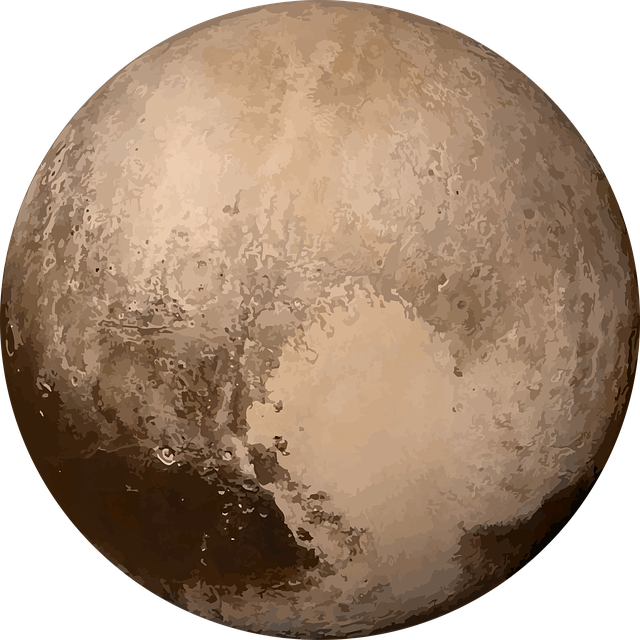
The New Horizons mission achieved its primary goal by flying close to Pluto in July 2015 and returning the first detailed, high-resolution images of the planet's surface.The image included an iconic heart-shaped area, which was named "Tombaugh Regio" in honor of its discoverer.The spacecraft is expected to reach the Kuiper Belt region around 2017, ultimately entering an orbit that will take it out of our solar system.
The reclassification of Pluto clearly demonstrates the dynamic nature of scientific classification and its impact on culture. Scientific definitions are not immutable truths, but rather dynamic constructs that evolve in response to new discoveries and improved understanding (e.g., the discovery of Eris and other Kuiper Belt objects). The strong public response, from “shock” to “planetary reversion,” reveals a deep human attachment to scientific classification and a tendency to resist changes in established knowledge, especially when they challenge familiar narratives learned in childhood. This highlights the complex interplay between scientific progress and cultural identity.
The New Horizons mission was conceived and launched before Pluto was reclassified , and it symbolically contained the remains of Clyde Tombaugh.It demonstrates the deep and enduring human desire to explore the unknown realms of space and leave a lasting mark. The journey of Tombaugh's remains beyond the solar system is a powerful, almost poetic culmination of his life's work, linking his personal legacy to the grand scientific endeavor. The naming of the "Tombaugh Region" further solidifies the connection between personal achievement and space exploration. This personal connection to discovery resonates with the personal motivations of other figures in this report, such as Lowell's passionate obsession with Mars or Taejo Yi Seong-gye's dynastic ambitions. It shows that personal passion, curiosity, and the desire for recognition can lead to monumental achievements that transcend the immediate scientific or historical context.
Lighting Up the Universe: A History of Planet Discovery
The Planets of the Eye and Their Ancient Meaning
For thousands of years, human civilization knew only five planets: Mercury, Venus, Mars, Jupiter, and Saturn.These celestial bodies were distinguished from the "fixed" stars because of their observable "wandering" motion across the night sky (a feature of their name, derived from the Greek "Planan", meaning "wandering").
Ancient cultures around the world, including those in East Asia, attributed profound meaning to these visible planets, incorporating them into their astrological systems, mythology, and calendars [User Query]. For example, in the East, the planets were associated with the Five Elements theory and were used as names for the days of the week [User Query]. The irregular and "wandering" movements of these five planets posed a considerable intellectual challenge and "brainache" to early astronomers who adhered to the geocentric model [User Query].
The dawn of telescopic astronomy
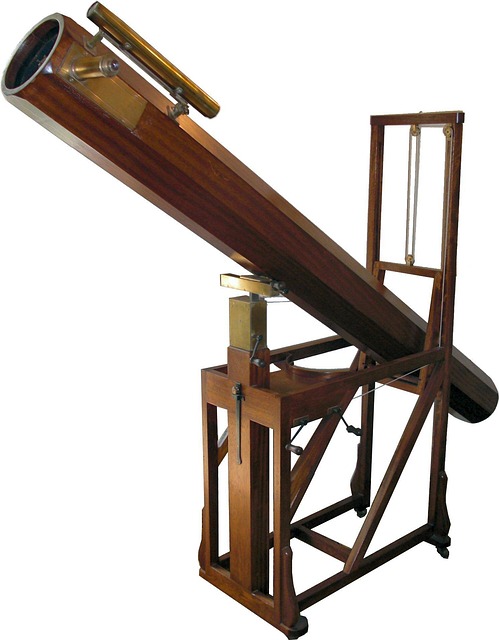
With the invention of the telescope, the known boundaries of our solar system have expanded dramatically. Uranus, the seventh planet, has the distinction of being the first planet discovered using this new technology.British astronomer William Herschel made this groundbreaking discovery in 1781.Even before Herschel's observations, Uranus had been seen by others, but was misclassified as a star because of its faint brightness and small size.Herschel himself initially assumed it was a comet.
Herschel's success was partly due to his mastery of building high-quality reflecting telescopes himself.His dedication to improving observational instruments led to other important discoveries, including the existence of two satellites of Uranus and infrared radiation.
Mathematical predictions and subsequent discoveries
The discovery of Neptune in 1846 represented a triumph of theoretical astronomy and mathematical prediction.Observing subtle irregularities in Uranus' orbit, British astronomer John Couch Adams and French astronomer Urbain Le Verrier independently calculated the existence and approximate location of an invisible eighth planet causing these perturbations.
Based on Le Verrier's calculations, German astronomer Johann Galle was able to pinpoint Neptune in the night sky, demonstrating the power of mathematical models in celestial dynamics [User Query]. This successful "Planet X" prediction method later inspired Perceval Lowell to search for planets beyond Neptune, but his specific calculations of the actual position of Pluto turned out to be inaccurate [User Query].
Evolution of observation technology
The launch of the Hubble Space Telescope into Earth's orbit in 1990 revolutionized astronomy by providing unprecedented space observations free from the obscuration and distortion of Earth's atmosphere.
Hubble's sharp images have profoundly shaped our understanding of the universe, but it needs maintenance and is ultimately due for retirement [User Query]. The user query sharply points to a potential shift in future astronomy strategies: the high costs and logistical challenges of launching and maintaining space telescopes could lead to an increased reliance on advanced ground-based observatories [User Query].
Adaptive Optics (AO): This sophisticated technology is at the heart of this transformation. AO systems actively compensate for atmospheric distortion by precisely deforming the telescope mirror hundreds to thousands of times per second.They use wavefront sensors to measure atmospheric aberrations and adjust deformable mirrors accordingly to correct for these errors, allowing ground-based telescopes to achieve resolutions that rival or even surpass those of space-based telescopes.AO often uses a “guide star” (either a natural bright star or an artificial star created by a laser) as a reference point for distortion measurements.
Keck Telescopes: Currently located on Mauna Kea in Hawaii, the twin Keck Telescopes are one of the largest ground-based observatories, each with a primary mirror measuring 10 meters in diameter.
Giant Magellan Telescope (GMT): Under construction in Chile, the GMT is poised to become the next-generation observatory.Scheduled for completion in the 2030s, the telescope will feature a massive 25.4-meter-diameter mirror and is expected to achieve infrared wavelength resolution 10 times better than the Hubble Space Telescope and four times better than the James Webb Space Telescope.Korea's 10% investment in GMT will give Korean scientists exclusive access for about a month each year, a significant advantage for the Korean astronomy community.
The following table summarizes the major astronomical discoveries and how they were made.
Table 2: Major astronomical discoveries and methods
| Planet Name | Discoverer | year | How to find | note |
| Mercury, Venus, Mars, Jupiter, Saturn | ancient civilization | Prehistoric times | Visual observation | Known since ancient times for its visibility and "wandering" movements. |
| Uranus | William Herschel | 1781 | Telescope observation | First planet discovered by telescope; initially thought to be a comet. |
| Neptune | Urbain Le Verrier, John Couch Adams (predictions); Johann Galle (observations) | 1846 | Mathematical predictions and telescope observations | Predicted based on gravitational perturbations of Uranus' orbit. |
| Pluto | Clyde Tombow | 1930 | Telescopic observations (based on Lowell's search for "Planet X") | Reclassified as a dwarf planet in 2006. |
| Planet 9 (hypothetical) | Mike Brown, Konstantin Batygin (predicted); Terry Longpan et al (candidates) | 2016 (predicted), 2025 (candidate) | Gravitational perturbations (Kuiper belt objects) and infrared surveys | Existence unknown; orbit of new candidate does not explain original hypothesis. |
The history of planetary discovery shows a clear progression from observation to prediction to technological advancement. From the naked eye observations of ancient times to the mathematical predictions of Neptune, to advanced technological solutions such as telescopes and adaptive optics, each step built on the previous. Unusual phenomena, such as the irregularities of Uranus’ orbit, serve as catalysts for new theories and the development of increasingly powerful observational instruments, demonstrating a continuous cycle of exploration, innovation, and improvement of astronomical knowledge. This recurring pattern of discovery is a fundamental feature of scientific progress in many fields. Unexplained phenomena continually lead to the formation of new theories and the development of specialized instruments to test those theories, creating a self-reinforcing loop of knowledge acquisition and technological advancement.
The observation mentioned in the user query that cost issues may lead to a shift away from launching space telescopes like Hubble and a greater reliance on adaptive optics technology is strongly supported by research data. Adaptive optics technologyNow ground-based telescopes like the GMT can achieve resolutions that surpass Hubble.This represents a strategic reevaluation within the astronomical community, suggesting that the enormous financial and logistical burden of space missions is increasingly being weighed against the rapidly increasing capabilities of ground-based observatories enabled by advances in optics and computing. Advances in adaptive optics and computing power are directly leading to dramatic improvements in ground-based telescope performance (the cause). This in turn has broader implications, potentially reducing the need for very expensive space telescopes for certain types of observations, and reshaping the future infrastructure and priorities of astronomical research.
The Size of the Solar System: Planets, Dwarf Planets, and Satellites
Relative size of the planets
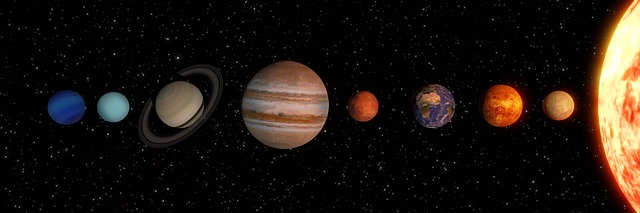
Our solar system shows a vast range in planetary size. From largest to smallest by diameter, they are Jupiter, Saturn, Uranus, Neptune, Earth, Venus, Mars, and Mercury.
Jupiter, the largest planet, is about 11 times wider than Earth (equatorial diameter of about 142,984 kilometers, compared to Earth's 12,756 kilometers).Jupiter's enormous mass is more than twice that of the other seven planets combined [User Query]. Because of its rapid rotation, Jupiter has a noticeably flattened shape. This means that its actual volume is not simply 11x11x11=1,331 times, but about 900 times that of the Earth [User Query].
In a broader perspective, the Sun is overwhelmingly massive, accounting for 99.9% of the total mass of the Solar System [User Query]. The Sun's diameter is 109 times larger than that of the Earth, and its volume is so massive that it could fit about 1.3 million Earths [User Query].
Relative sizes of major satellites and dwarf planets
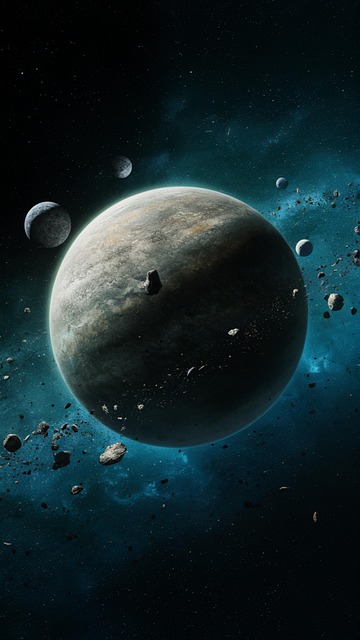
In addition to the major planets, our solar system is home to many interesting moons and dwarf planets, some of which are comparable to or even larger than the smaller planets. From largest to smallest by diameter: Ganymede (Jupiter's third moon), Titan (Saturn's largest moon), Mercury (planet), Callisto (Jupiter's fourth moon), Io (Jupiter's first moon), Earth's Moon, Europa (Jupiter's second moon), Triton (Neptune's largest moon), and Pluto (dwarf planet).
In particular, Ganymede is the largest moon in the entire Solar System, with a diameter larger than that of Mercury or the dwarf planet Pluto.
Earth's Moon is the fifth-largest satellite, but has the unique distinction of being the largest satellite relative to its parent planet's diameter (excluding the dwarf planet Pluto and its moon Charon, which are unique double planetary systems) [User Query]. Pluto's moon Charon is exceptionally large compared to Pluto, at about two-thirds the size of Pluto, leading some to describe them as a "double planet" system [User Query].
The table below compares the relative sizes of objects in our solar system.
Table 3: Comparison of relative sizes of solar system objects
| category | Celestial body name | Approximate diameter (km) | Key Features / Relative Size |
| Planets (largest to smallest by diameter) | |||
| Jupiter | 142,984 | Largest planet; about 11 times the diameter of Earth; about 900 times the volume of Earth. | |
| Saturn | 120,536 | Second largest planet; famous for its prominent ring system. | |
| Uranus | 51,118 | Third largest planet; ice giant. | |
| Neptune | 49,528 | Fourth largest planet; ice giant. | |
| earth | 12,756 | Our planet; a standard of comparison. | |
| Venus | 12,104 | Similar size to Earth (about 0.95 times the diameter of Earth); terrestrial planet. | |
| Mars | 6,779 | About half the diameter of Earth; terrestrial planet. | |
| Mercury | 4,879 | The smallest planet; a terrestrial planet. | |
| Major satellites and dwarf planets (largest to smallest by diameter) | |||
| Ganymede (Jupiter's moon) | 5,262 | The largest satellite in the solar system; larger than Mercury. | |
| Titan (Saturn's moon) | 5,149 | Second largest satellite; has a dense atmosphere. | |
| Callisto (Jupiter's moon) | 4,821 | The third largest satellite. | |
| Io (Jupiter's moon) | 3,643 | Fourth largest satellite; most volcanically active celestial body. | |
| Earth's Moon | 3,474 | Fifth-largest satellite; largest satellite relative to its planet (excluding double planetary systems). | |
| Europa (Jupiter's moon) | 3,122 | Sixth-largest satellite; strong evidence of subsurface ocean. | |
| Triton (Neptune's satellite) | 2,706 | Seventh-largest satellite; retrograde orbit. | |
| Pluto (dwarf planet) | 2,376 | Largest dwarf planet; reclassified in 2006. | |
| Eris (dwarf planet) | 2,326 | Second largest dwarf planet; led to Pluto's reclassification. | |
| Charon (Pluto's moon) | 1,212 | The largest satellite of a dwarf planet; forms a double planetary system with Pluto. |
For a detailed comparison of diameter and mass,Emphasizes the enormous scale and physical diversity of the bodies in our solar system. Specific reference to Jupiter's flattened shape due to its rapid rotation [User Query] goes beyond mere size to provide an understanding of the fundamental physical processes and dynamical forces that shape celestial bodies. This diversity extends to moons, some of which are larger than planets, challenging the simple hierarchical view of planetary systems. This understanding of the enormous scale and diverse shapes of the bodies in our solar system is fundamental to astrophysics and planetary science. It informs theories of planetary formation, the evolution of planetary systems, and the possibility of diverse environments beyond Earth (potentially habitable). It also continually challenges anthropocentric views of what constitutes a "typical" or "important" celestial body.
History of the Korean Dynasty: Astronomy, Philosophy, and Surnames
Five Elements Theory
The Five Elements (木, 火, 土, 金, and 水) are fundamental concepts in traditional East Asian philosophy, and have had a profound influence on cosmology, medicine, art, and even political thought.This system asserts that all phenomena in the universe are created and changed through the dynamic interaction of these five elements, according to the principle of yin and yang.
A key aspect of this theory is the "cycle of antagonisms" which dictates the antagonistic relationships between the elements: wood overcomes earth, earth overcomes water, water overcomes fire, fire overcomes metal, and, crucially, metal overcomes wood.These complex philosophical frameworks were not merely abstract, but had practical implications for a range of cultural practices, such as the choice of auspicious names, the design of cities, and even the justification of political power.

King Taejo of Joseon, Lee Seong-gye and the prophecy of "the tree will gain the nation"
Taejo Lee Seong-gye, who founded the Joseon Dynasty, overthrew the previous Goryeo Dynasty (Wang clan) and seized power.His surname, Lee (李), is composed of the characters meaning "tree (木)" and "son (子)".
During the chaotic late Goryeo period, a powerful prophecy was widely spread that "Mokjadeukguk (木子得國)", meaning "the son of a tree will gain the country" or "the Lee family will gain the country."This prophecy was created by breaking the character Lee (李) into the characters for wood (木) and child (子), and was used as a powerful tool to justify the coming dynastic change and the rise of the Lee family.
User query suggests that this prophecy was interpreted from the perspective of the Five Elements Theory. If the surname Wang (王) is related to "earth (土)" (because if you remove the stroke above from the character Wang (王), it looks similar to earth (土), then in the conflicting relationship of the Five Elements, "tree (木)" (Lee (李), the surname of Yi Seong-gye) would naturally overcome "earth (土)" (Wang (王)), providing cosmic legitimacy for Yi Seong-gye's usurpation of the throne [User Query].
An interesting theory about the change of the Kim surname
Literally meaning 'gold, iron, iron', Kim (金) is the most common surname in Korea today. Historically, the pronunciation of this surname was closer to "Geum".
User query introduces a popular but widely discussed theory that the change in pronunciation from "geum" to "kim" is directly related to King Taejo Lee Seong-gye and the theory of the five elements.:
- According to this theory, the Five Elements theory stipulates that wood (李, the surname of Lee Seong-gye) is "cut off" or overcome by metal (金, the surname of Geum/Kim).
- It is alleged that in order to ensure that there was no surname that could theoretically "defeat" the new king and his dynasty, Yi Seong-gye issued a decree ordering that the surname Geum (金) be pronounced as "Kim" instead of "Geum."
Counterarguments/Alternative Theories: However, scholarly research and historical records present a decisive counterargument. There is no verifiable historical document to support the claim that King Taejo Lee Seong-gye ordered a change in the pronunciation of the name Geum (金) .
A more widely accepted academic theory attributes the pronunciation change to the linguistic influence of Mongolian during the Yuan intervention (Yeo-Mongol Wars) in the Goryeo period .During the 14th century, the pronunciation of the character "金" in Chinese changed to a sound closer to "김". This linguistic evolution, combined with the significant cultural and political influence of Mongolia on Korea, led to the natural adoption of the "김" pronunciation. This is because many Mongolian words entered the Korean vocabulary during this period.
Further evidence can be found in the medieval Japanese record, the "Shoku Nihongi (釋日本紀)", which states that people with the surname "Geum" during the Silla period were pronounced "Komu", confirming that the "Geum" pronunciation was actually used before the change to "Kim".
This section shows how abstract philosophical systems such as the Five Elements Theory were directly applied to justify political power and dynastic changes (such as Yi Seong-gye’s prophecy of Shepherd’s Deukguk). Popular but unproven theories about the change in Kim surnames better illustrate how such philosophical beliefs can be intertwined with cultural practices. In contrast, more scholarly explanations point to external linguistic influences (such as the presence of the Mongols) as the true driving force behind pronunciation change. This highlights the complex and multifaceted nature of historical change, where grand intentional narratives (such as a king changing his surname) may be less accurate than subtle, long-term processes of cultural diffusion and linguistic evolution influenced by geopolitical changes.
The user query initially presents a compelling and dramatic folk theory about a proclamation allegedly issued by King Taejo Yi Seong-gye regarding the Kim surname. However, the research material explicitly states that "there is no historical record" to support this surname change claim.Instead, a more robust scholarly explanation is offered, rooted in verifiable linguistic variation and geopolitical influence (the Mongol presence). This direct contradiction between popular narratives and the absence of historical evidence has important implications. It demonstrates the common phenomenon that attractive and emotionally resonant folk accounts persist in the popular consciousness despite a lack of empirical evidence, and stands in sharp contrast to the rigorous and often less dramatic explanations derived from scholarly historical and linguistic studies.
Perceval Lowell: The Dual Legacy of an American Visionary
Lowell's Astronomical Pursuits
Percival Lowell (1855-1916) was a successful businessman, prolific writer, keen mathematician, and influential astronomer. A Harvard graduate, his intellectual curiosity was wide-ranging.
His passion for astronomy led to the founding of the Lowell Observatory in Flagstaff, Arizona in 1894, a significant personal investment that demonstrated his dedication to astronomical observations.
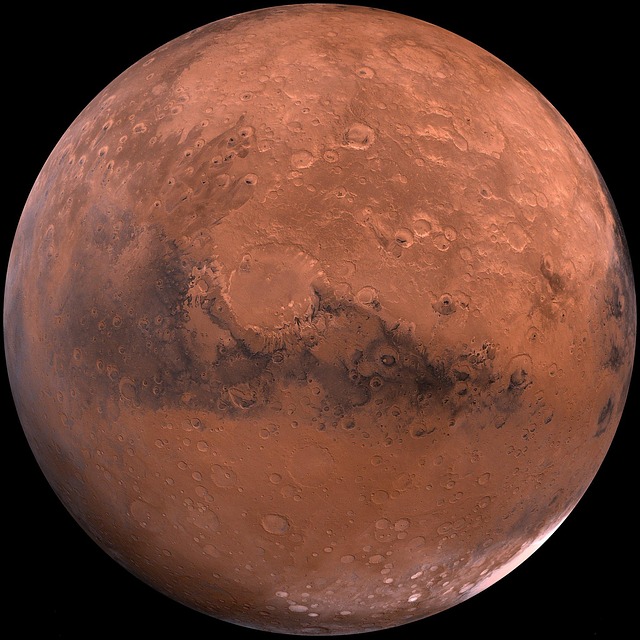
Martian "Canals": Lowell's most famous and ultimately controversial astronomical pursuit was his obsession with Mars, a fascination that began in 1877 when Italian astronomer Giovanni Schiaparelli announced that he had observed linear features on the Martian surface that he called "canali" (Italian for "channels" or "valleys").Crucially, the term was mistranslated by the American press as "canal", implying an artificial waterway.
These linguistic misunderstandings captured the public imagination and gave rise to widespread belief in a Martian civilization.Lowell was so convinced that there was intelligent life on Mars that he meticulously mapped more than 180 "canals" (other astronomers later documented more than 500) and developed a detailed theory that they were irrigation systems built by a dying Martian civilization to transport melting polar cap water.
His compelling, but ultimately flawed, theories had a profound impact on popular culture, inspiring numerous works of science fiction, including H.G. Wells's groundbreaking novel The War of the Worlds [User Query]. Today, thanks to several orbital and rover missions, Mars is known as a barren, red planet characterized by natural features such as the Valles Marineris, a massive 4,000-kilometer-wide canyon system, and far from man-made canals [User Query].
Search for Planet X: In addition to Mars, Lowell also proposed the existence of a "Planet X" beyond Neptune [User Query]. He made his case for its existence based on mathematical calculations based on anomalies detected in the orbits of outer planets [User Query]. While his specific calculations for the actual position of Pluto were later shown to be inaccurate, his dedicated search efforts at the Lowell Observatory ultimately led to the accidental discovery of Pluto by Clyde Tombaugh in 1930, 14 years after Lowell's death.
Lowell and Korea Relations
Perceval Lowell’s legacy extends beyond astronomy and has important, but often overlooked, connections to Korea. While in Japan in 1883, he was invited to serve as secretary and advisor to the first Korean mission to the United States (Bobingsa).He played an important role in guiding the delegation of eight prominent figures, including Hong Yeong-sik, Min Yeong-ik, Seo Gwang-beom, and Yu Gil-jun, to the United States and accompanying them on their return to Japan.
Impressed by his service and insight, King Gojong of Joseon invited Lowell to Joseon, where he stayed for about three months.Based on his observations of Joseon's politics, economy, culture, and society during his visit, Lowell wrote in 1885He published the influential book Chosön, the Land of the Morning Calm: A Sketch of Korea.
The touching phrase "Land of the Morning Calm" in the title of his book was often quoted by Western travelers and missionaries, and became a widely known and enduring nickname for Korea [User Query]. User Query expresses his personal admiration for Lowell's positive, affectionate, and nuanced description of Korea, and highly praises it in contrast to other critical foreign travelogues of the time [User Query].
Lowell's Martian "canals" are a classic and compelling example of the powerful influence of confirmation bias and preconceptions in observations. Schiaparelli's original term "canalis" (waterways) was mistranslated as "canalis" (artificial waterways), which fueled Lowell's fervent belief that there was intelligent life on Mars. His subsequent careful observations, despite their rigor, were likely influenced by this strong belief, which led him to "see" what he expected, even when the features were illusions. This highlights how human desire and confidence can sometimes overwhelm objective observations, especially when technological limitations, such as those of early telescopes, create ambiguities. It serves as an important cautionary tale in the history of science, emphasizing the importance of rigorous peer review, independent verification of discoveries, and constantly questioning one's own assumptions. This stands in stark contrast to the self-correcting mechanisms observed in the modern search for Planet Nine, and illustrates the evolution of scientific methodology.
The story of Perceval Lowell is notable not only for his astronomical pursuits, but also for his unexpectedly profound contribution to Western understanding of Korea. His active role as a guard of the Korean mission and subsequent writing of Joseon, Land of the Morning CalmIt shows how an individual's diverse interests (travel, cultural observation) can intersect with significant geopolitical events to leave a lasting cultural legacy (the nickname "Land of the Morning Calm"). His multifaceted background as a businessman, writer, mathematician, and astronomer uniquely positions him to connect seemingly unrelated fields. This phenomenon of personal passions intertwining with broader historical and cultural influences is similar to the interdisciplinary nature of the report itself, showing how different areas of knowledge and human experience can be connected through individual action, intellectual curiosity, and a willingness to explore beyond conventional boundaries.
